FreshwaterBrackish
Mozambique tilapia
Oreochromis mossambicus
Cichlidae, Pseudocrenilabrinae
Oreochromis mossambicus
Cichlidae, Pseudocrenilabrinae
Know what is missing? Suggest it in the app.
Lives wild in Botswana, Eswatini, Lesotho, Malawi, Mozambique, South Africa, and Zimbabwe.
Introduced to American Samoa, Angola, Antigua & Barbuda, Australia, Bahamas, Bangladesh, Barbados, Benin, and 83 more countries.
Adults thrive in standing waters. Inhabits reservoirs, rivers, creeks, drains, swamps and tidal creeks; commonly over mud bottoms, often in well-vegetated areas. Also found in warm weedy pools of sluggish streams, canals, and ponds. Most common in blind estuaries and coastal lakes, but usually absent from permanently open estuaries and open sea and from fast-flowing waters. Normally not found at high altitudes. Able to survive extreme reduction of temporary water bodies. Highly euryhaline. Grows and reproduces in fresh-, brackish and seawater. Can be reared under hyper-saline conditions. Tolerates low dissolved oxygen levels and can utilise atmospheric oxygen when water oxygen levels drop. Mainly diurnal. May form schools. Omnivorous, feeds mainly on algae and phytoplankton but also takes some zooplankton, small insects and their larvae, shrimps, earthworms and aquatic macrophytes. Juveniles carnivorous/omnivorous, adults tend to be herbivorous or detritus feeders. Large individuals have been reported to prey on small fishes, and occasionally cannibalise their own young. Exhibits considerable plasticity in feeding habits as well as in reproductive biology. Polygamous, maternal mouthbrooder. Reaches sexual maturity at 15 centimeter length, but stunted fish may breed at 6-7 centimeters and at an age of just over 2 months. Fecundity high. Extended temperature range 8-42 °C, natural temperature range 17-35°C, with salinity-dependent difference in temperature tolerance. Somewhat aggressive toward other species. Marketed fresh and frozen. Excellent palatability, with small head and large dress-out weight, and filets without small bones. Used extensively in biological, physiological and behavioural research. Translocated and introduced for aquaculture, sport fishing, stocking man-made lakes and biological control of nuisance plants and animals. Eurytopic; a most successful and vagile invader.
Two completely different aquariums: forest rivers with soft, brown water, roots and leaves, and Rift Valley lake cichlids in hard, alkaline water with big rock piles.
From the store to the tank: how to get the fish used to your water, why you should add only a few at a time, and what to watch for in the first few days.
Why new fish should live in a tank of their own for a few weeks before they move in, what you need, and what to look for.
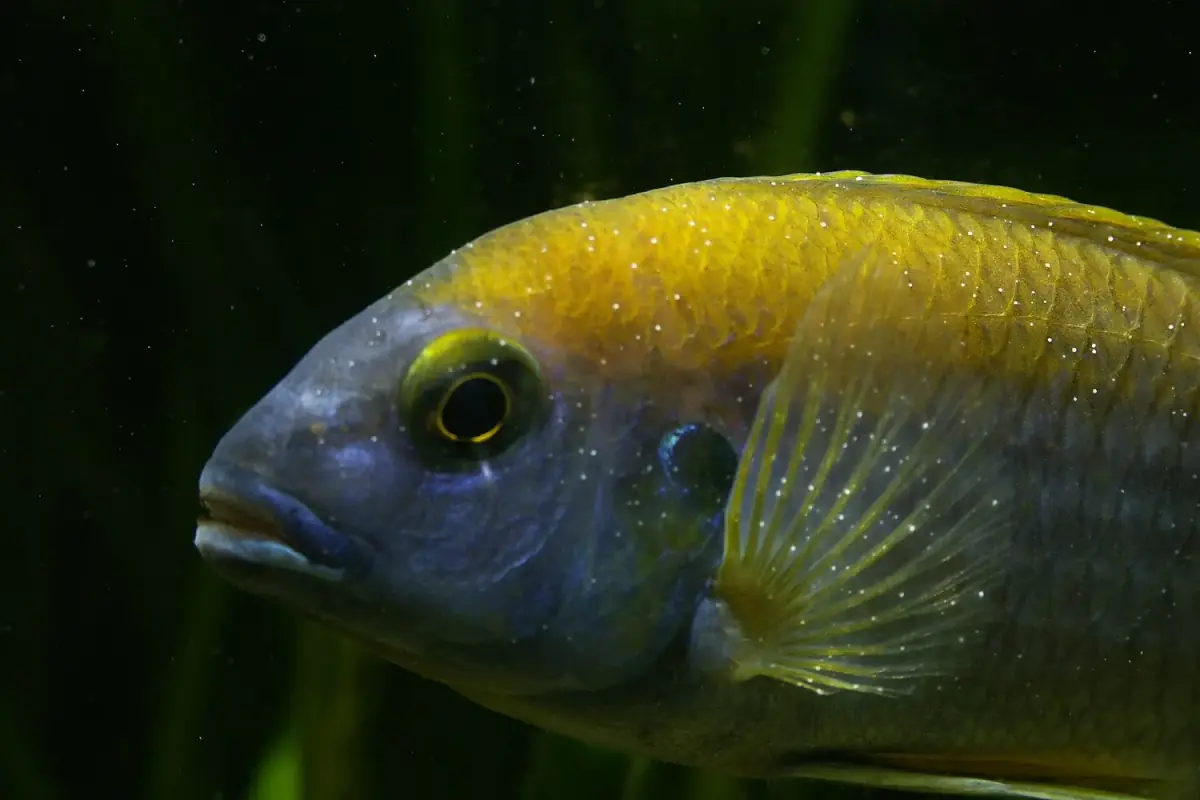
The most common disease in aquarium fish. How to recognize it, why it shows up, and how to get rid of it.