Saltwater
High-hat
Pareques acuminatus
Sciaenidae
Pareques acuminatus
Sciaenidae
Know what is missing? Suggest it in the app.
Lives wild in Anguilla, Aruba, Bahamas, Barbados, Belize, Brazil, British Virgin Islands, Cayman Islands, and 16 more countries.
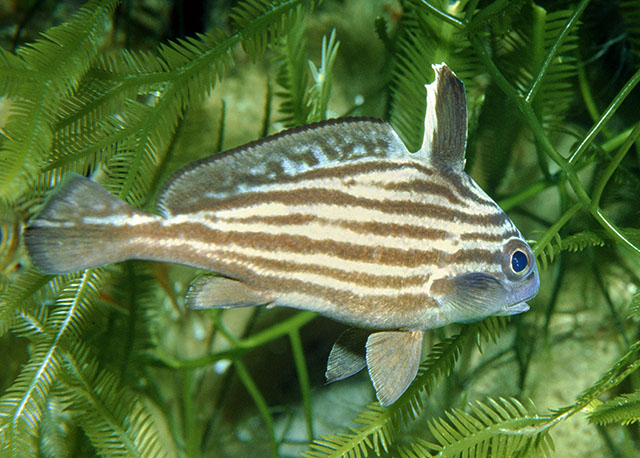
Occurs in clear waters of tropical islands, especially near coral reefs, but also in adjacent bays over rough bottom. Also often found under eroded edges of seagrass beds. Juveniles of about the same age, often in groups of 3-7, were observed in very shallow water under ledges or near sand pockets close to reef crevices, The young are usually found in small groups of the same age, in very shallow water under ledges or near sand pockets close to reef crevices,but may also be found in deeper water. Adults occurs among rocks, under ledges, inside caves and, eventually in the open. The species is mainly nocturnal, spending the day sheltered and feeding at night on sand, mud, and rubble bottoms close to the reef, feeding on crustaceans, polychaetes, small bony fishes, and zooplankton. Has been reared in captivity.
Temperament, fin nippers, fish that eat other fish, and fish that need the same water. And what the Harmony mark in the app means.
From the store to the tank: how to get the fish used to your water, why you should add only a few at a time, and what to watch for in the first few days.
Why new fish should live in a tank of their own for a few weeks before they move in, what you need, and what to look for.
What is different in a saltwater aquarium: salt, refractometer, live rock and corals. An introduction for anyone thinking of giving it a try.