Freshwater
West African lungfish
Protopterus annectens
Protopteridae
Protopterus annectens
Protopteridae
Know what is missing? Suggest it in the app.
Lives wild in Benin, Burkina Faso, Cameroon, Central African Republic, Chad, Congo - Kinshasa, Côte d’Ivoire, Gambia, and 14 more countries.
Oliver KnottDec 4, 2022
Obligate air-breathing. Found in marginal swamps and backwaters of rivers and lakes. Carnivorous, food includes molluscs, but also frogs, fish and seed. In Kenya it feeds mostly on plant material, like roots. Strongly associated with life of aquatic plants in terms of breeding and feeding ecologies; nests are made in weedy areas. Normally lives on flood plains and secretes, when these dry up during the dry season, a thin slime around itself which dries into a fragile cocoon; normally hibernates from the end of one wet season to the start of the next, buut can live in its cocoon for over a year. For hibernating the fish literally chews its way into the substrate ejecting mud out of its gill openings, reaching a depth of 3-25 cm below the surface depending on the length of the fish; the lungfish wriggles around, thereby hollowing out a bulb-shaped chamber and coming to rest with its nose pointing upward; they breathe air at the mouth of the chamber's tube and then sink back into the expanded part of the chamber. As the water disappears the respiratory trips cease; air reaches the fish via the tube to the surface. Under aquatic conditions this lungfish can survive more than three and half years of starvation, showing the same behavior - no motion and same body posture - as an aestivating specimen.
Temperament, fin nippers, fish that eat other fish, and fish that need the same water. And what the Harmony mark in the app means.
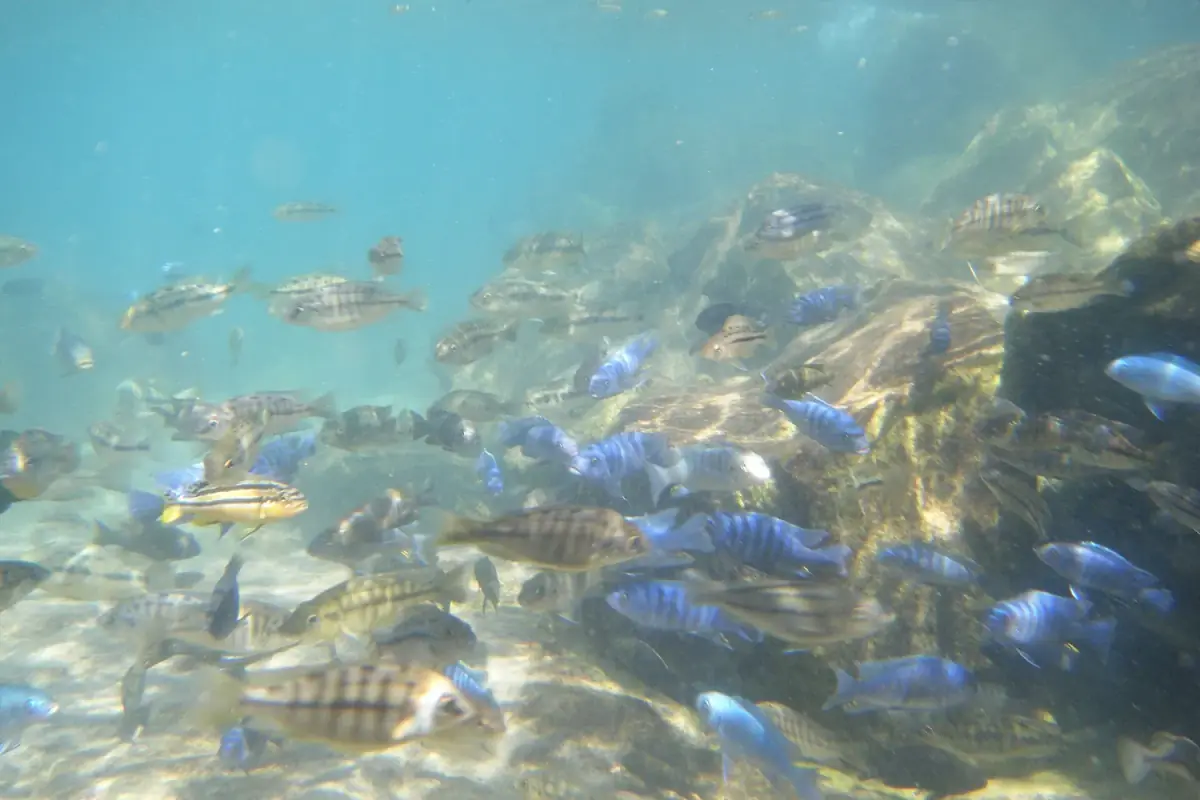
Two completely different aquariums: forest rivers with soft, brown water, roots and leaves, and Rift Valley lake cichlids in hard, alkaline water with big rock piles.
From the store to the tank: how to get the fish used to your water, why you should add only a few at a time, and what to watch for in the first few days.
Why new fish should live in a tank of their own for a few weeks before they move in, what you need, and what to look for.