Saltwater
Sergeant-major
Abudefduf saxatilis
Pomacentridae, Glyphisodontinae
Abudefduf saxatilis
Pomacentridae, Glyphisodontinae
Know what is missing? Suggest it in the app.
Lives wild in Angola, Anguilla, Antigua & Barbuda, Aruba, Bahamas, Barbados, Belize, Benin, and 59 more countries.
World Wonders UnveiledJan 7, 2025
Juveniles are common in tide pools while adults are found over shallow reef tops. Adults frequently form large feeding aggregations of up to several hundred individuals. Food items include algae, small crustaceans and fish, and various invertebrate larvae. At Fernando de Noronha Archipelago, this species feeds on spinner dolphins’ feces and vomits. The offal feeding may be regarded as a simple behavioral shift from plankton feeding to drifting offal picking. Also, juveniles may hold cleaning stations together with the doctorfish (Acanthurus chirurgus) and the blue tang (Acanthurus coeruleus) and graze algae as well as pick molted skin and parasites from green turtles (Chelonia mydas ). This behavior is preceded by a characteristic inspection usually followed by feeding nips on the turtles’ skin (head, limbs, and tail), as well as on the carapace. The most inspected and cleaned body parts are the flippers. Adult males adopt a bluish ground color when guarding eggs. Oviparous, distinct pairing during breeding. Eggs are demersal and adhere to the substrate. Attracted to divers who feed fish. Marketed fresh. Has been reared in captivity.
From the store to the tank: how to get the fish used to your water, why you should add only a few at a time, and what to watch for in the first few days.
Why new fish should live in a tank of their own for a few weeks before they move in, what you need, and what to look for.
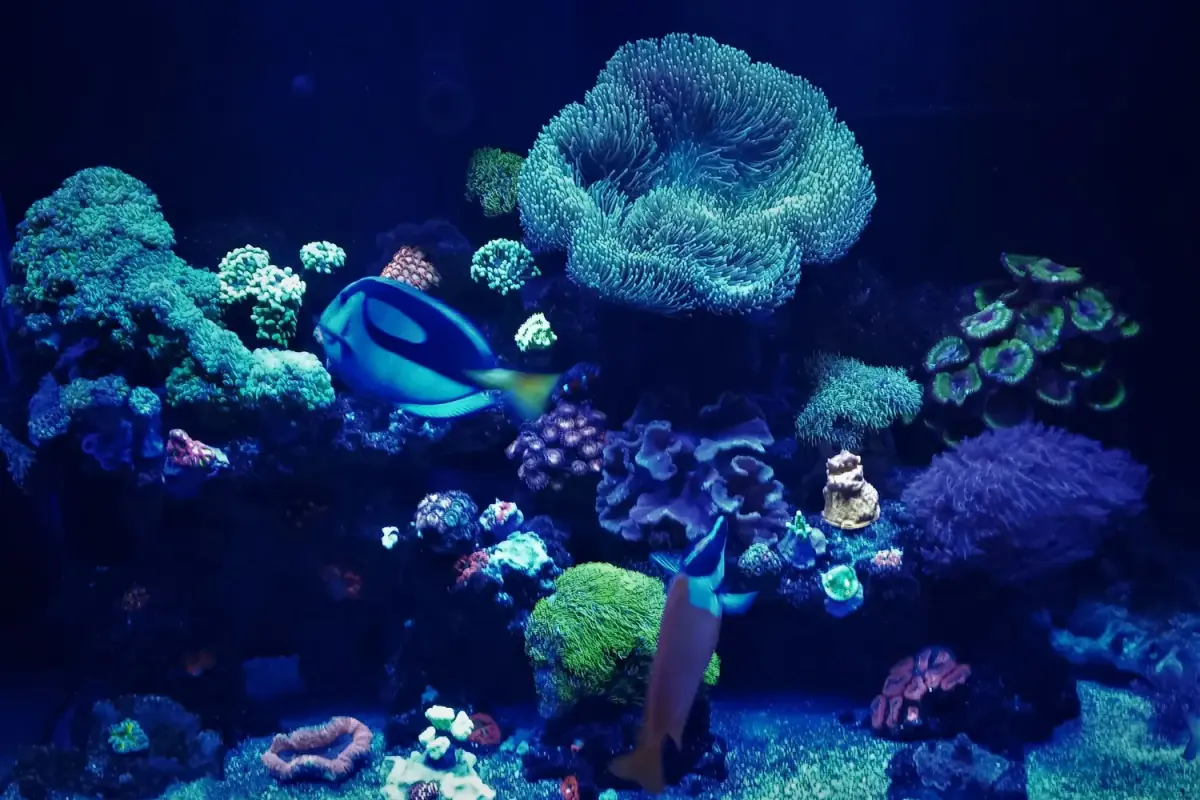
What is different in a saltwater aquarium: salt, refractometer, live rock and corals. An introduction for anyone thinking of giving it a try.