BrackishSaltwater
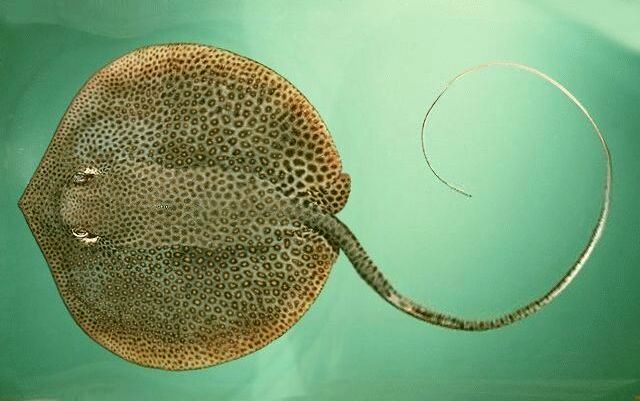
Honeycomb stingray
Himantura uarnak
Dasyatidae, Urogymninae
Himantura uarnak
Dasyatidae, Urogymninae
Know what is missing? Suggest it in the app.
Lives wild in Australia, Bahrain, Bangladesh, Brunei, Cambodia, China, Christmas Island, Comoros, and 37 more countries.
Introduced to Cyprus, Israel, Lebanon, Syria, and Türkiye.
Common off sandy beaches and in shallow estuaries and lagoons; also found in sandy areas of coral reefs. Also offshore down to 50 m depth. May enter fresh water. Feeds on small fishes, bivalves, crabs, shrimps, worms and jellyfishes. Ovoviviparous. Common catch of the demersal tangle net, bottom trawl, longline and beach seine fisheries. Popular angling fish. Not esteemed as a food fish. Used in Chinese medicine. Tail is used as It is parasitised by the monogeneans Dendromonocotyle colorni and Dendromonocotyle ukuthena on the dorsal skin surface.
Temperament, fin nippers, fish that eat other fish, and fish that need the same water. And what the Harmony mark in the app means.
From the store to the tank: how to get the fish used to your water, why you should add only a few at a time, and what to watch for in the first few days.
Why new fish should live in a tank of their own for a few weeks before they move in, what you need, and what to look for.
What is different in a saltwater aquarium: salt, refractometer, live rock and corals. An introduction for anyone thinking of giving it a try.