Saltwater
Chain moray
Echidna catenata
Muraenidae, Muraeninae
Echidna catenata
Muraenidae, Muraeninae
Know what is missing? Suggest it in the app.
Lives wild in Anguilla, Antigua & Barbuda, Aruba, Bahamas, Barbados, Belize, Bermuda, Brazil, and 27 more countries.
A benthic and solitary species found commonly on reefs and rocky shore areas. Feeds on small fishes and crustaceans. At Fernando de Noronha Archipelago, off NE Brazil, forages for sally lightfoot crabs (Grapsus grapsus) on exposed reefs at ebb tide and in tide-pools mostly at daytime. Able to withstand up to 30 minutes out of water while foraging, uses four main tactics both in and out of the water. Searches for prey at pool rims and rock bases poking into crevices and holes, stealthily approaches previously sighted prey, chases prey and ambushes prey from under rocks and crevices. Hunting success varies with employed tactic, but overall success is about 50%. May move up to 6 meters in about 1 hour while foraging on the exposed reef. Its crab hunting is mostly visually guided and a fish darting nearby a stealthily foraging moray may cause it to miss the strike; the missed crab may be chased up to 5 m on the reef. Able to strike with its body partly or entirely out of the water, usually strikes from a distance of 5 to10 centimeters. Small crabs are swallowed whole, whereas larger ones are torn apart by a combination of tugging, rotating, knotting, and thrashing movements. Handling time is related to prey size, the largest crabs (carapace width 2.3-3.2 times larger than moray’s head width) broken up and swallowed within 90 to 240 seconds. Attracted to plastic or rubber decoys dragged on a nylon string nearby, striking at these.
Temperament, fin nippers, fish that eat other fish, and fish that need the same water. And what the Harmony mark in the app means.
From the store to the tank: how to get the fish used to your water, why you should add only a few at a time, and what to watch for in the first few days.
Why new fish should live in a tank of their own for a few weeks before they move in, what you need, and what to look for.
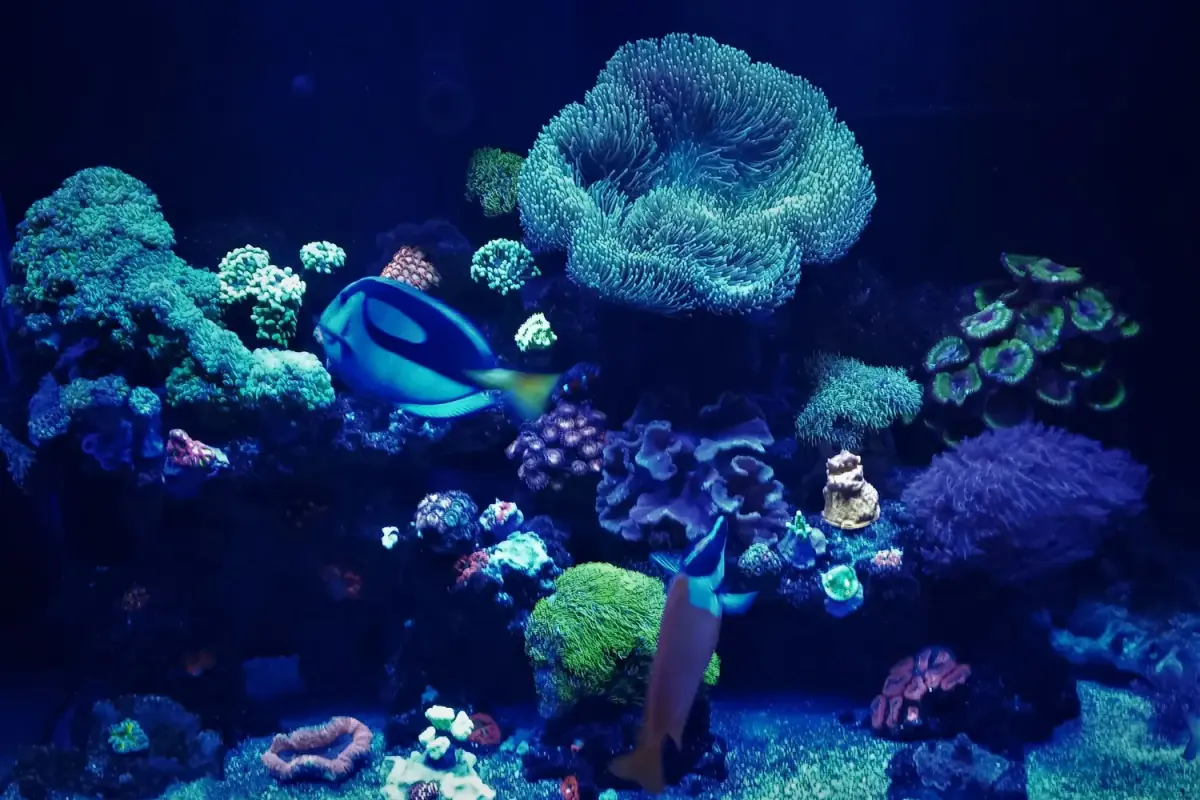
What is different in a saltwater aquarium: salt, refractometer, live rock and corals. An introduction for anyone thinking of giving it a try.